
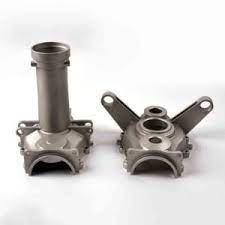
In the evolving world of manufacturing, prototyping plays a crucial role in product design, testing, and refinement. The machined casting prototype manufacturing field has witnessed significant innovations, leading to more efficient, precise, and cost-effective production processes. This article explores some of the latest trends and techniques in machined casting prototype manufacturing, focusing on how these advancements are changing the way prototypes are produced.
3D Printing for Machined Castings
The integration of 3D printing with machined casting has emerged as a revolutionary approach in prototype manufacturing. 3D printing enables rapid prototyping by creating highly detailed models that can be directly used for casting, reducing lead times and costs. This advancement in machined casting prototype manufacturing allows for greater precision and faster iteration during the development process.
-
Faster Iteration: Traditional casting methods often require extensive adjustments to molds and patterns. 3D printing allows for quick modifications to the design, enabling faster iteration.
-
Complex Geometries: 3D printing allows the creation of complex, intricate shapes that may be difficult or impossible to achieve with traditional methods.
-
Material Flexibility: With 3D printing, manufacturers can use a wide range of materials that are not easily accessible with traditional methods, further enhancing prototype customization.
Investment Casting Advancements
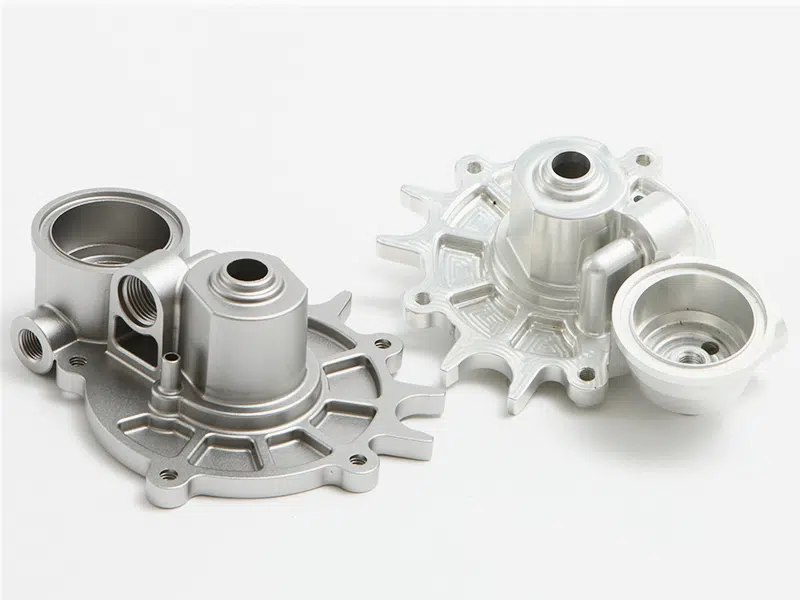
Investment casting, a well-established method in prototype manufacturing, has benefited from technological advancements that enhance its precision and cost-effectiveness.
-
Improved Wax Patterns: Innovations in the production of wax patterns have led to better surface finishes and more accurate prototypes, reducing the need for post-casting finishing processes.
-
High-Precision Molds: New technologies allow for the creation of molds with finer details and higher accuracy, which translates to better-quality prototypes with fewer imperfections.
-
Streamlined Process: The integration of advanced robotics and AI in investment casting has streamlined the entire process, from wax pattern creation to mold preparation, making it faster and more efficient.
CNC Machining and Hybrid Manufacturing
CNC (Computer Numerical Control) machining has long been a cornerstone in the production of machined casting prototypes. Recent innovations have combined CNC machining with additive manufacturing techniques, leading to hybrid systems that offer enhanced flexibility and precision.
-
Hybrid Machines: These machines integrate both additive and subtractive manufacturing processes, allowing for faster and more accurate prototyping with fewer steps.
-
Reduced Waste: By combining additive manufacturing and CNC machining, manufacturers can reduce material waste, as the additive part builds up the material while the subtractive machining refines it.
-
Enhanced Precision: Hybrid systems enable prototypes to be produced with tighter tolerances and improved surface finishes, which is especially beneficial for high-performance applications like aerospace and automotive industries.
Metal Casting Alloys for Prototyping
The development of new metal casting alloys has had a significant impact on prototype manufacturing, particularly in terms of durability, performance, and cost.
-
Lightweight Alloys: New aluminum, titanium, and magnesium alloys are being used to produce prototypes that are not only lighter but also maintain strength and durability.
-
High-Performance Alloys: Advances in high-performance alloys allow prototypes to better simulate the characteristics of their final, production-grade counterparts, ensuring more accurate testing and validation.
-
Custom Alloy Composition: The ability to create custom alloy compositions for specific prototypes ensures that manufacturers can optimize their prototypes for particular performance criteria.
Conclusion
The future of machined casting prototype manufacturing lies in the integration of innovative technologies that improve efficiency, accuracy, and cost-effectiveness. As 3D printing, investment casting, CNC machining, and new material alloys continue to evolve, they are transforming how prototypes are designed and produced. These innovations are not only enabling faster prototyping but are also ensuring higher-quality products that meet the demanding standards of modern industries.